Entries by

Replacing the MBA: Venture Mode, Entrepreneurship, and the Future of Business Education

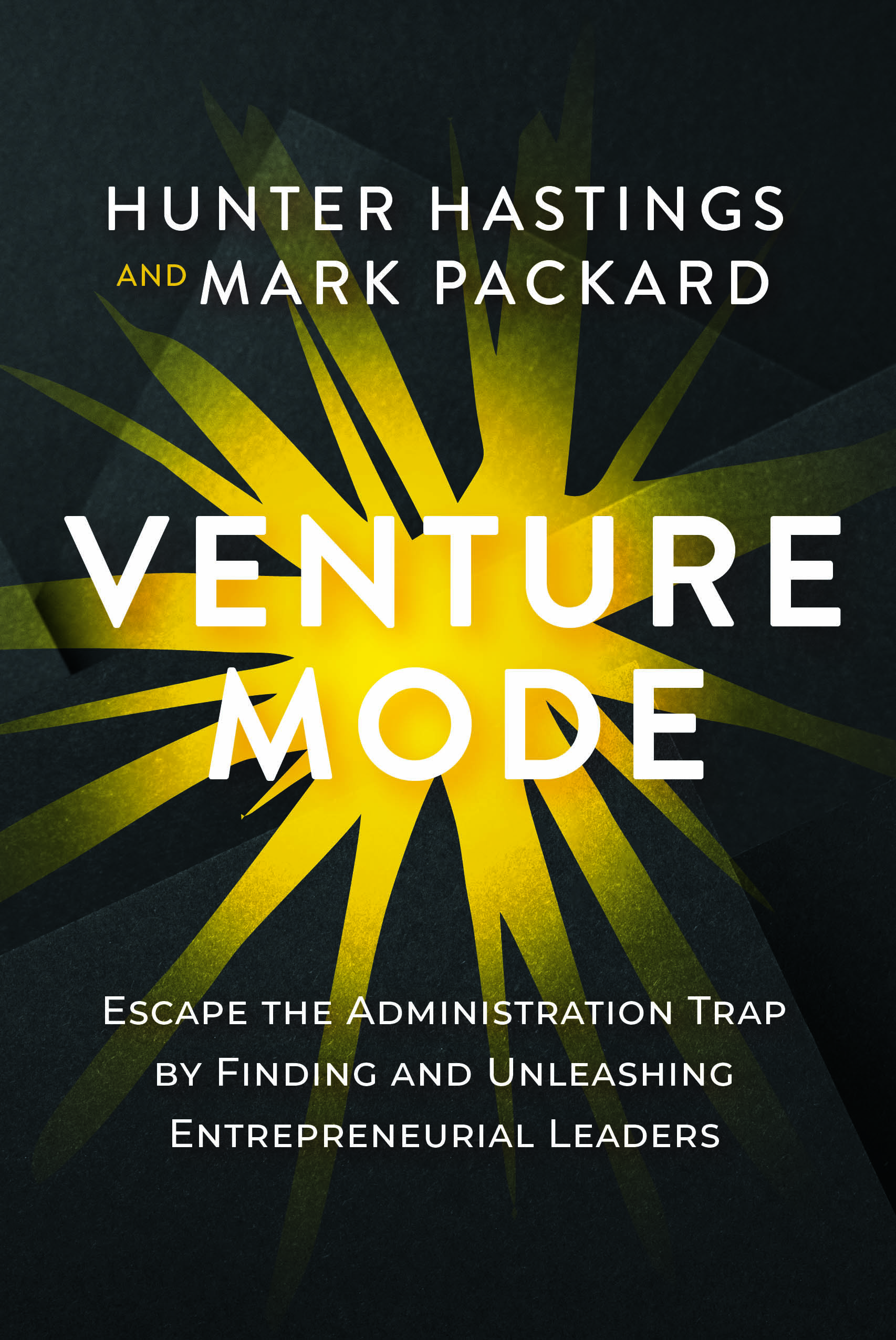
Following principles of business administration is the path to disaster for your business or any business. Yet business administration is what’s taught in business school and revered as the highest goal of management. We need to change how we think about business, which requires changing our mental model.

Entrepreneurial leadership is the new mental model..

In Part 2 of the special 3-part series of The Value Creators Podcast featuring the alternative approach to the business administration methods taught in MBA school, Venture Mode, Hunter Hastings and co-author Mark Packard continue their exposition of what comes after traditional business administration. Together, they examine how business schools institutionalize bureaucracy, why reform from inside the system is nearly impossible, and how administration mode crowds out entrepreneurial leadership.

They introduce a radically different alternative: the Master of Business Enterprise (MBE)—a new model of business education grounded in entrepreneurship, experimental learning, uncertainty, and real-world value creation. The conversation explores why customers—not processes or analytics—must be at the center of business thinking, and why skills like empathy, judgment, creativity, and tenacity are essential for navigating uncertainty.

This episode challenges long-held assumptions about business models, what business education should teach, who it should serve, and how entrepreneurial leaders are truly developed.

Key Insights:

Why the MBA reinforces administration mode and systematically underproduces entrepreneurial leaders.
How exploration, discovery, and customer-centered value reshape business education.
Why entrepreneurship must be learned through practice, empathy, and real-world experience.

The Wrong Economics Has Been Running Your Business.

Hunter Hastings & Mark Packard · from Venture Mode, releasing May 5, 2026 What passes for economic thinking in most firms isn’t economics at all. It’s central planning — and it’s costing you more than you know. Capitalism Works. But Not the Way Most Firms Practice It. The track record of capitalism is extraordinary. Over the […]

Enablement Capitalism, Part 5: From Extraction To Enablement

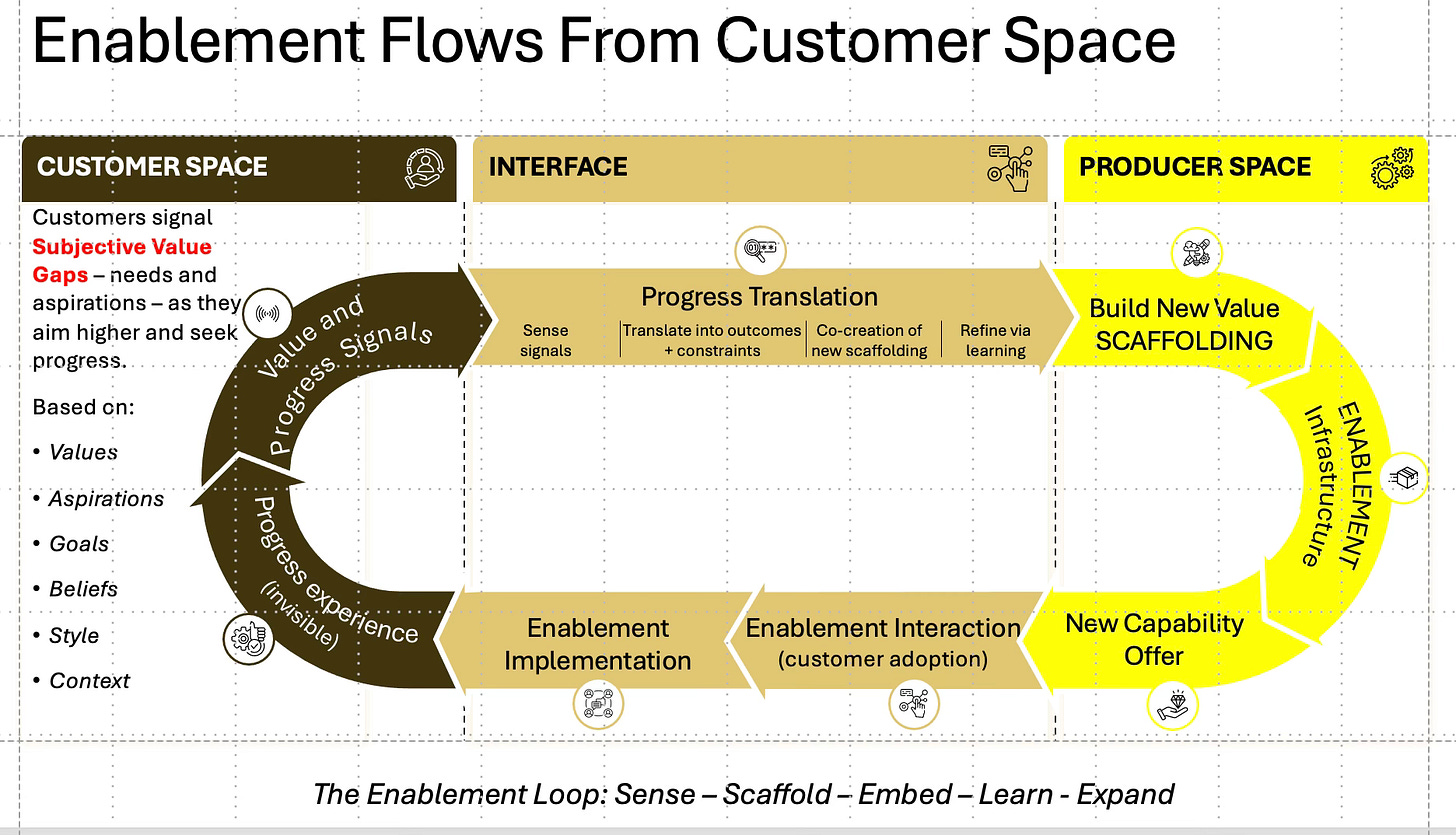
  In Part 1 of this series on Enablement Capitalism, I proposed a shift in capitalism’s operating logic: from selling outputs to increasing what customers can accomplish.In Part 2, I described why this shift is emerging now: a new constraint regime shaped by complexity, aspiration, AI-scaled capability, and organizational innovation.In Part 3, I offered a […]

Enablement Capitalism, Part 4: The Practicalities Of Operating in Customer Space

Part 1 of the Enablement Capitalism series named the enablement shift: from outputs to customer accomplishment.Part 2 explained why it’s emerging now: a new constraint regime shaped by complexity, aspiration, AI-scaled capability, and organizational innovation.Part 3 provided a diagnostic: the Enablement Index—questions that reveal whether you’re built for customer progress. The practical question is: how […]

Primal Intelligence: How Entrepreneurs Create Value in Uncertainty with Angus Fletcher

What if intelligence isn’t about prediction, but about acting when the future is unknowable? In his conversation with Angus Fletcher, Hunter Hastings examines how entrepreneurs use primal intelligence—intuition, imagination, emotion, and judgment—to create markets rather than forecast them. The episode reframes leadership and strategy for a world defined by uncertainty.

Helping Entrepreneurs Build Real Businesses on Generative Platforms with Neil Twa

Building on Amazon isn’t about finding the right product—it’s about building the right system. In his conversation with Neil Twa, Hunter Hastings explores generative entrepreneurship, marketplace discipline, and what separates durable businesses from short-lived hustle plays. The episode reframes scale, risk, and value creation, offering a practical roadmap for entrepreneurs who want to build companies designed to last—and to sell.